
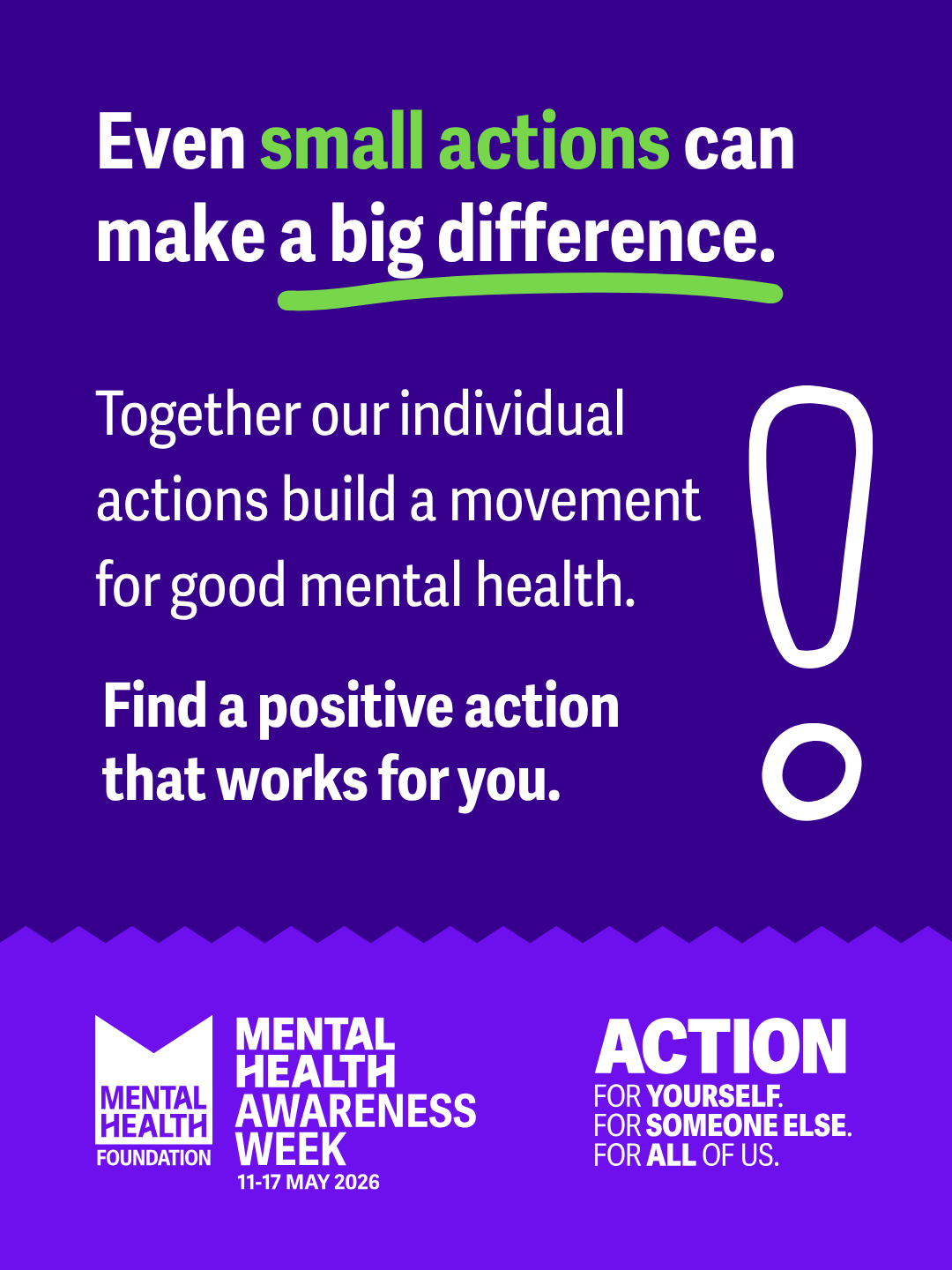
Mental Health Matters – It’s Time for Action
This year’s Mental Health Awareness Week carries a clear message: awareness is vital,
but real change only comes when we take action. The theme is Action – and it couldn’t
be more relevant. Because knowing that mental health matters is one thing. Doing
something about it is another.
Mental health doesn’t discriminate. It touches every generation, every household, every
walk of life yet the experiences can look very different depending on who you are and
what you’re facing.
Seniors – older doesn’t mean invisible
Growing older brings wisdom, perspective and often a lifetime of resilience. It can also
bring challenges that quietly erode mental wellbeing: reduced mobility, loss of
independence, bereavement, and – perhaps most significantly – loneliness.
There are currently 1.4 million chronically lonely older people in England. Research
shows that 9 in 10 who are often lonely are also unhappy or depressed, and prolonged
social isolation has been linked to a 25% increased risk of developing dementia.
Mobility limitations don’t just affect the body – they cut people off from the
communities, routines and relationships that underpin good mental health.
Despite this, when an older person is diagnosed with depression, they are far more
likely to be offered medication than talking therapy. The action needed here isn’t
complicated – it’s connection, conversation, and making sure older people know that
support exists.
Parents and carers – the invisible load
There’s a generation of adults quietly holding everything together while running on
empty. They are raising children – often with very different personalities navigating the
same family dynamic – while simultaneously caring for ageing parents, managing
finances, and trying to stay afloat in a demanding working world. They are known as the
sandwich generation, and the toll on their mental health is significant.
According to a 2025 UCL study, more than 1 in 4 sandwich carers in the UK report
symptoms of mental ill-health – and the more hours of care provided, the worse the
impact. 79% say their caring responsibilities have clashed with work, and the mental
health decline for intensive carers can persist for years.
For many parents, the challenge is rarely one thing. It is the accumulation – the
unresolved tension with a teenager, the parent who needs a GP appointment, the
deadline, the empty fridge, the feeling that everyone needs something and there is
nothing left to give. This group is one of the most time-poor and stressed in the country,
yet also one of the least likely to ask for support. That needs to change.
Children and young people – a growing crisis that demands action
The statistics on young people’s mental health make for sobering reading. The World
Health Organization report that 1 in 7 children and adolescents aged 10–19 are
currently living with a mental health condition. One-third of all mental health conditions
emerge before the age of 14 – and half before the age of 18. Suicide is the third leading
cause of death among young people aged 15–29.
Despite this, the majority of young people experiencing symptoms never access care.
They’re held back by stigma, limited services and a system struggling to keep pace with
demand. The WHO and UNICEF are calling urgently for action. All their reporting points
to early intervention not just being beneficial but essential.
For parents and those working with young people, the message is clear: notice, ask and
don’t wait for things to reach crisis point before reaching out.
The 5 Cs – a framework for taking action
Action doesn’t have to mean grand gestures. Sometimes it starts with a single,
intentional step. The 5 Cs of mental health offer a practical framework for doing exactly
that – across every age and stage of life.
- Connection – reach out to someone who might be struggling, or let someone in
when you are - Compassion – for others, and critically, for yourself
- Coping – build and strengthen strategies that work for you, before the pressure
peaks - Community – invest in the relationships and spaces that make people feel they
belong - Care – seek support when you need it, and help others find it when they do
Nurturing these five areas won’t solve everything, but they provide a solid foundation for
better mental health, and a starting point for meaningful action.
Take action – how I can help
Perhaps you’re a parent navigating an impossible juggle, someone supporting an older
relative who is struggling, or a person who works with young people and wants to feel
better equipped. Whatever your situation, coaching offers a confidential, forward-
focused space to think things through and take meaningful steps forward.
This Mental Health Awareness Week, let the theme of Action be your prompt. If
something here has resonated, get in touch and book a call with me. You don’t have
to be in crisis to deserve support – and you don’t have to keep carrying it alone.
Take action – how I can help
Perhaps you’re a parent navigating an impossible juggle, someone supporting an older
relative who is struggling, or a person who works with young people and wants to feel
better equipped. Whatever your situation, coaching offers a confidential, forward-
focused space to think things through and take meaningful steps forward.
This Mental Health Awareness Week, let the theme of Action be your prompt. If
something here has resonated, get in touch and book a call with me. You don’t have
to be in crisis to deserve support – and you don’t have to keep carrying it alone.